
The “One Border, One Force” policy was originally conceptualized under the Atal Bihari Vajpayee government following the 1999 Kargil War based on the recommendations of the Group of Ministers (GoM) on reforming national security.
The objective of the policy was to eliminate administrative overlap, improve accountability, and streamline intelligence gathering along India’s land borders by assigning a single dedicated Central Armed Police Force (CAPF) to each specific international frontier:
| Border | Assigned Force |
|---|---|
| Pakistan & Bangladesh | Border Security Force (BSF) |
| China | Indo-Tibetan Border Police (ITBP) |
| Nepal & Bhutan | Sashastra Seema Bal (SSB) |
| Myanmar | Assam Rifles |
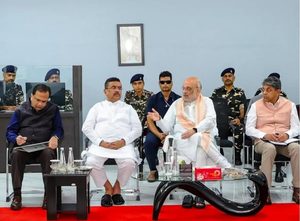
Key Points from Amit Shah’s Statement
- Specialized Role of SSB: Shah emphasized that guarding unfenced, open borders—such as the 1,751 km India-Nepal border and the 699 km India-Bhutan border—presents a unique operational challenge. Without physical fencing, forces must rely heavily on intelligence, public goodwill, and constant vigilance.
- Securing Strategic Corridors: Highlighting the Siliguri Corridor (“Chicken’s Neck”), Shah outlined a triangular security grid linking local administration, advanced technology, and dedicated sentinels to ensure regional stability.
- Integrating Technology & Infrastructure: The Home Ministry is pairing the “One Border, One Force” model with modern “Smart Border” frameworks, combining physical fencing upgrades, anti-drone tech, sensors, and surveillance systems.
- Civic Engagement: The strategy reinforces the role of border guarding forces not just as security personnel, but as facilitators of cultural affinity and community trust in border villages.