


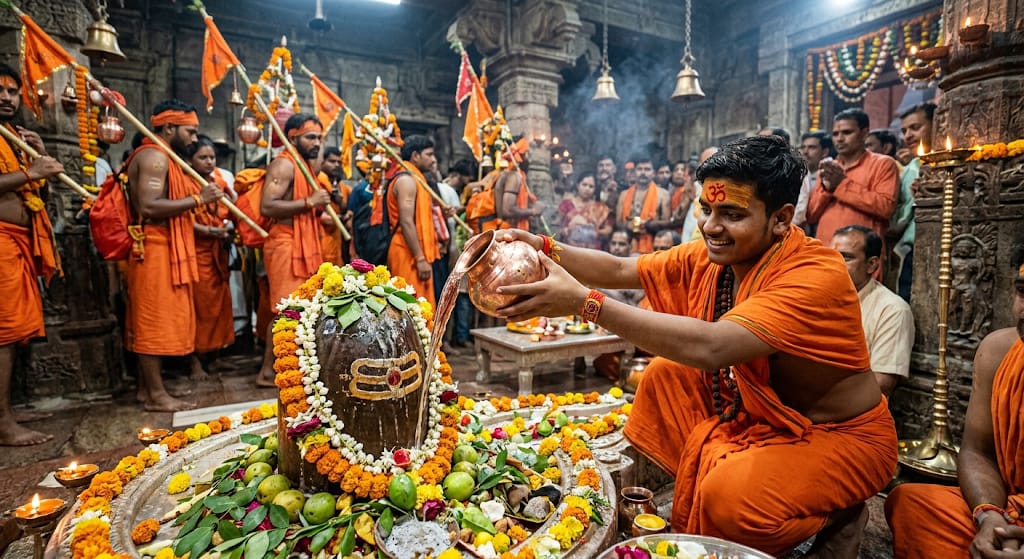
Sawan Shivratri, observed on the Chaturdashi Tithi (14th day) of the Krishna Paksha in the holy month of Sawan, holds immense spiritual significance for Lord Shiva’s devotees. On this auspicious day, Kanwariyas—devotees who carry holy water on foot over hundreds of kilometers from sacred rivers like the Ganges in Haridwar, Gaumukh, or Neelkanth—conclude their arduous pilgrimage by performing Jal Arpan (water offering) on the Shivalinga.
1. Mythological & Spiritual Significance
The tradition of offering water (Jal Abhishekam) during Sawan is deeply rooted in Hindu scriptures:
- Cooling the Divine Heat: During the churning of the ocean (Samudra Manthan), Lord Shiva consumed the deadly poison (Halahala) to protect the universe. The poison created intense heat in His body. To soothe Lord Shiva, the Devas (celestial beings) and sages offered holy Ganga water to Him.
- The First Kanwariyah: According to legend, Ravana (a devout scholar and Shiva follower) is considered the first Kanwariyah, having carried holy Ganga water to offer at the Pura Mahadev temple.
- Equivalent to Ashwamedha Yajna: It is believed that undertaking the Kanwar Yatra with strict devotion and offering Ganga water to Shiva bestows blessings equivalent to performing an Ashwamedha Yajna and fulfills all righteous wishes.
2. Auspicious Timings for Jal Arpan
Offering water during specific Muhurtas (auspicious windows) amplifies the spiritual merits of the prayer:
| Time / Prahar | Auspicious Window | Significance |
|---|---|---|
| Brahma Muhurta | 04:30 AM – 05:15 AM | Ideal for early morning sacred offerings and meditation |
| Abhijit Muhurta | 12:00 PM – 12:50 PM | Most favorable midday period for all auspicious rituals |
| Godhuli Kaal | 06:45 PM – 07:10 PM | Evening twilight, perfect for Sandhya Aarti and Jal Arpan |
| Nishita Kaal | 12:00 AM – 12:45 AM (Midnight) | The most powerful time for Shivratri’s core midnight Mahapuja |
3. Step-by-Step Rituals for Offering Kanwar Water
- Purification & Intent: Wash your hands and feet before entering the temple compound. Take a moment to set your spiritual intention (Sankalp).
- Respect for Kanwar: Never place the Kanwar directly on the ground. Keep it elevated on a stand or platform while removing the holy water containers.
- Offering the Water: Use a copper or brass vessel to gently pour the Ganga water over the Shivalinga in a continuous stream while chanting “Om Namah Shivaya” or “Bam Bam Bhole.”
- Sacred Offerings: Follow the water offering with Belpatra (Bael leaves), Dhatura, Bhang, white flowers, sandalwood paste (Chandan), and Bhasma (sacred ash).
- Aarti & Seeking Forgiveness: Conclude by lighting a lamp/incense, performing Aarti, and praying for forgiveness for any unintentional mistakes made during the journey or worship.
4. Key Guidelines & Rules to Follow
- Direction of Worship: Always face North while offering water to Lord Shiva, as North represents the direction of Mount Kailash and Goddess Parvati (Bamang).
- Vessel Material: Use a copper vessel for water offerings. However, never use copper for milk offerings—use brass, silver, or steel instead.
- Mindfulness: Maintain inner peace and order, especially in crowded temples, ensuring a respectful atmosphere for all fellow devotees.