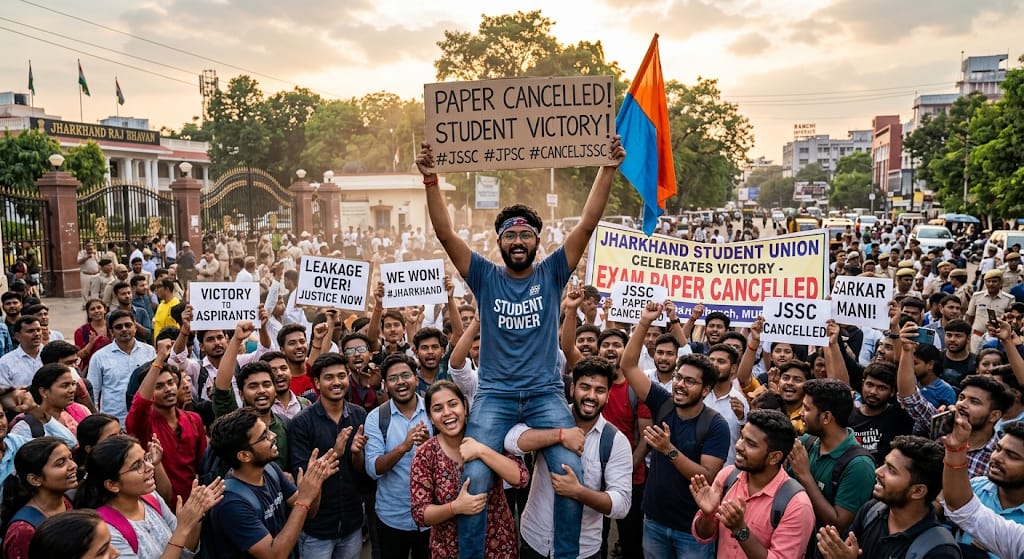
The government of Jharkhand announced the cancellation of major state competitive examinations, including the Jharkhand Staff Selection Commission Combined Graduate Level (JSSC-CGL) exam, following weeks of student protests.
The Backdrop
Students in Ranchi and across Jharkhand mobilized under the banner of groups like the JPSC-JSSC Reforms Manch. Protesters raised serious allegations of paper leaks, systemic irregularities, and compromised evaluation processes in multiple recruitment examinations. Key exams under scrutiny included the 14th JPSC Combined Civil Services Prelims, the JSSC-CGL, and multiple tests administered by TSR Data Processing Private Limited (TDPL).
Key Milestones of the Movement
- The 24-Day Agitation: What started as localized demonstrations grew into a massive state-wide movement. Protesters staged sit-ins outside the Jharkhand Assembly, called for a Vidhan Sabha March, and organized indefinite hunger strikes led by prominent student leaders like Devendra Nath Mahto.
- Resignations & Initial Concessions: On August 9, amid mounting pressure, three members of the JPSC resigned. The government initially agreed to cancel the 14th JPSC Preliminary exam and certain backlog tests, claiming that “98% of demands” had been addressed. However, student groups rejected the offer and refused to stand down until the flagship JSSC-CGL exam was scrapped.
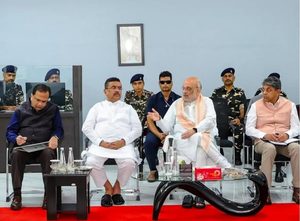
- The Final Cabinet Decision: Following an emergency four-hour Cabinet meeting led by Chief Minister Hemant Soren, the state government formally announced the cancellation of the JSSC-CGL and all other examinations conducted by the agency TDPL.
- The Aftermath: Following the announcement, student leader Devendra Mahto broke his 8-day hunger strike.
Key Outcomes & Ongoing Debates
| Aspect | Outcome / Action |
|---|---|
| Cancelled Exams | 14th JPSC Civil Services Prelims, JSSC-CGL, and all exams conducted by agency TDPL. |
| Investigative Action | Ongoing CID and Special Investigation Team (SIT) probes into exam leak networks. |
| Systemic Reforms | Proposed establishment of a fast-track court (90-day charge-sheet rule) and a reform committee comprising experts from IIT-ISM Dhanbad, IIM Ranchi, and XLRI Jamshedpur. |
| Unresolved Demands | Protesters continue to press for an independent Central Bureau of Investigation (CBI) probe into all past recruitment irregularities. |
The Dual Narrative
While thousands of protesting aspirants celebrated the cancellation as a victory for transparency, the decision also created uncertainty. Candidates who had legitimately cleared the preliminary rounds expressed frustration over the sudden reset of the recruitment cycle, highlighting the ongoing dilemma of balancing systemic anti-leak measures with the interests of successful aspirants.